Visible changes are only part of the picture
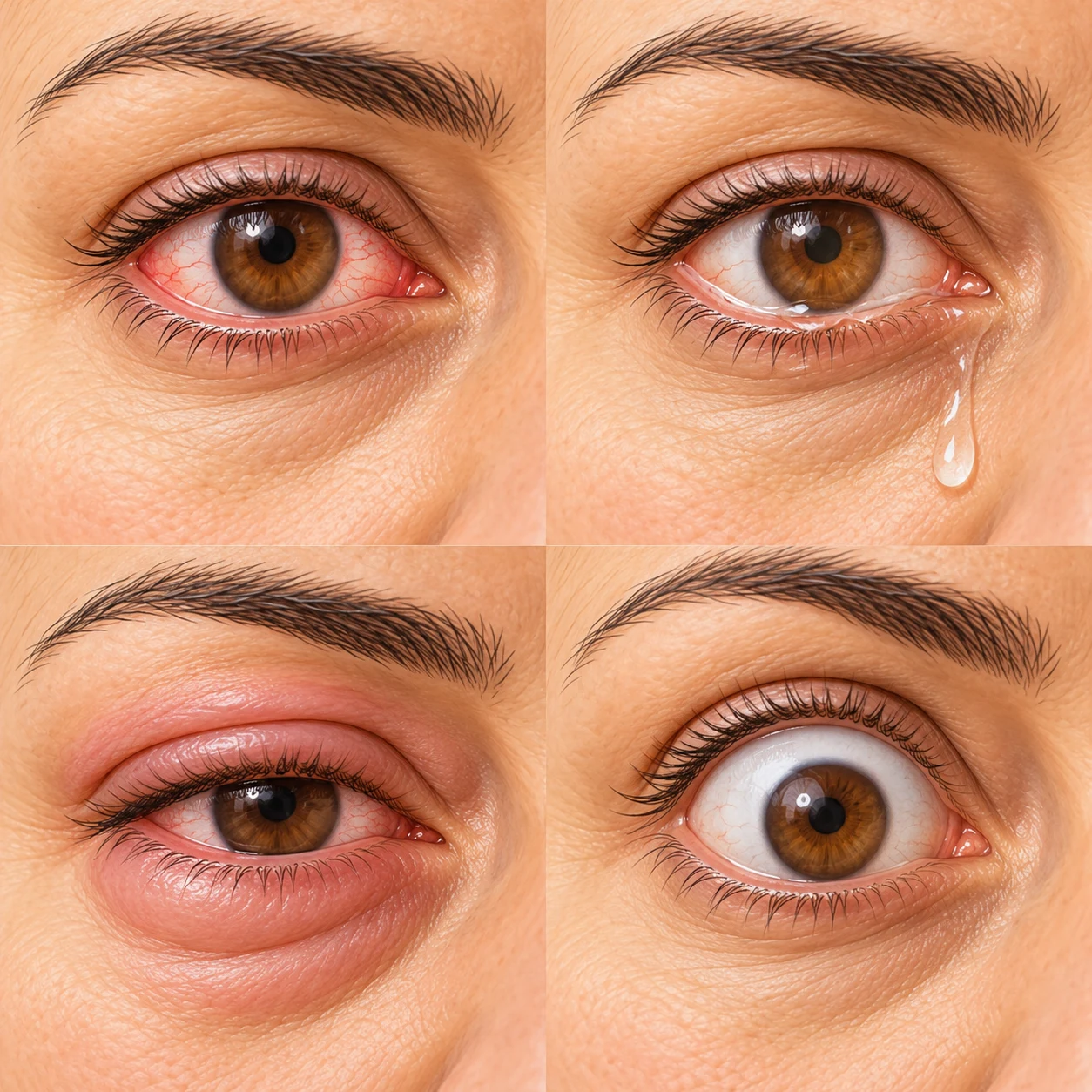
Possible changes include swelling around the eyes, eyelids that appear pulled back, and increased eye prominence. The two sides can differ. You may first notice the change in an ordinary photograph or when someone comments, but that observation cannot establish the cause.
A person may also have gritty eyes, pressure, pain with movement or double vision. Conversely, an eye that looks different online may have another explanation. The useful step is describing what has changed for you rather than matching your face to a gallery of patients.
Evidence: American Thyroid Association: Thyroid eye disease · National Eye Institute: Graves' eye disease
How to use the illustration on this page
The illustration shows separate examples of redness, watering, swelling and lid retraction. These features can occur for several reasons. They are not stages in a guaranteed sequence and are not a diagnostic reference. Some changes matter because of how the eye functions, even when they are not dramatic in a picture.
A photograph cannot measure eye pressure, assess the optic nerve, check color vision or perform the movements and measurements needed in an examination. Do not use a reassuring-looking photo as a reason to ignore a new vision change.
Evidence: American Thyroid Association: Thyroid eye disease · National Eye Institute: Graves' eye disease
Use your own photographs to explain a change
If you already have older photographs, bring a small selection that helps show your usual appearance. Choose a few rather than building a large image collection. The aim is communication with the clinician, not repeated self-measurement.
- Note roughly when the change became noticeable.
- Describe each eye separately if one differs.
- Explain whether lids close fully and how sleep feels.
- Include changes in reading, driving or seeing one image.
- Bring the names of eye products and your thyroid history.
Do not delay care while finding an ideal photograph. You can request an examination using a simple description of the new symptom and its effect.
Ask about function as well as appearance
At the visit, ask what the clinician sees, whether another cause needs consideration, and how activity and severity are assessed. Your priorities may include appearance, comfort and daily function together. Explain which concern matters most to you and ask what each proposed part of care can address.
An educational illustration is not a before-and-after result or a promise of treatment outcome. Your clinician can discuss the expected benefits and limits of medicines, surgery or other care in the context of your examination.
Evidence: Cleveland Clinic: Thyroid eye disease symptoms, diagnosis, and care · National Eye Institute: talking with your eye doctor
Know when the photograph is not the priority
New loss or dimming of vision, colors appearing faded, a missing area of vision, or severe eye pain needs urgent assessment. If an eyelid will not close fully, contact an eye clinician immediately; pain or blurred vision makes urgent assessment especially important. Sudden vision loss is an emergency. Use the urgent-care guide and do not wait for an online opinion or a routine visit when vision changes.
For persistent changes without urgent features, make a concise symptom record and ask for an eye appointment. The first-signs guide and symptom checklist can help you explain the pattern without assigning yourself a diagnosis.
Evidence: American Thyroid Association: Thyroid eye disease · National Eye Institute: Graves' eye disease
Sources and limits
- American Thyroid Association: Thyroid eye disease
- National Eye Institute: Graves' eye disease
- Cleveland Clinic: Thyroid eye disease symptoms, diagnosis, and care
Page updated March 2025; use current FDA/DailyMed labels for the current prescription landscape. - National Eye Institute: talking with your eye doctor
Sources checked October 22, 2026. This is an original educational summary. Source dates and access notes are distinct from clinical review. A clinical professional should review this new material before it is promoted as reviewed.